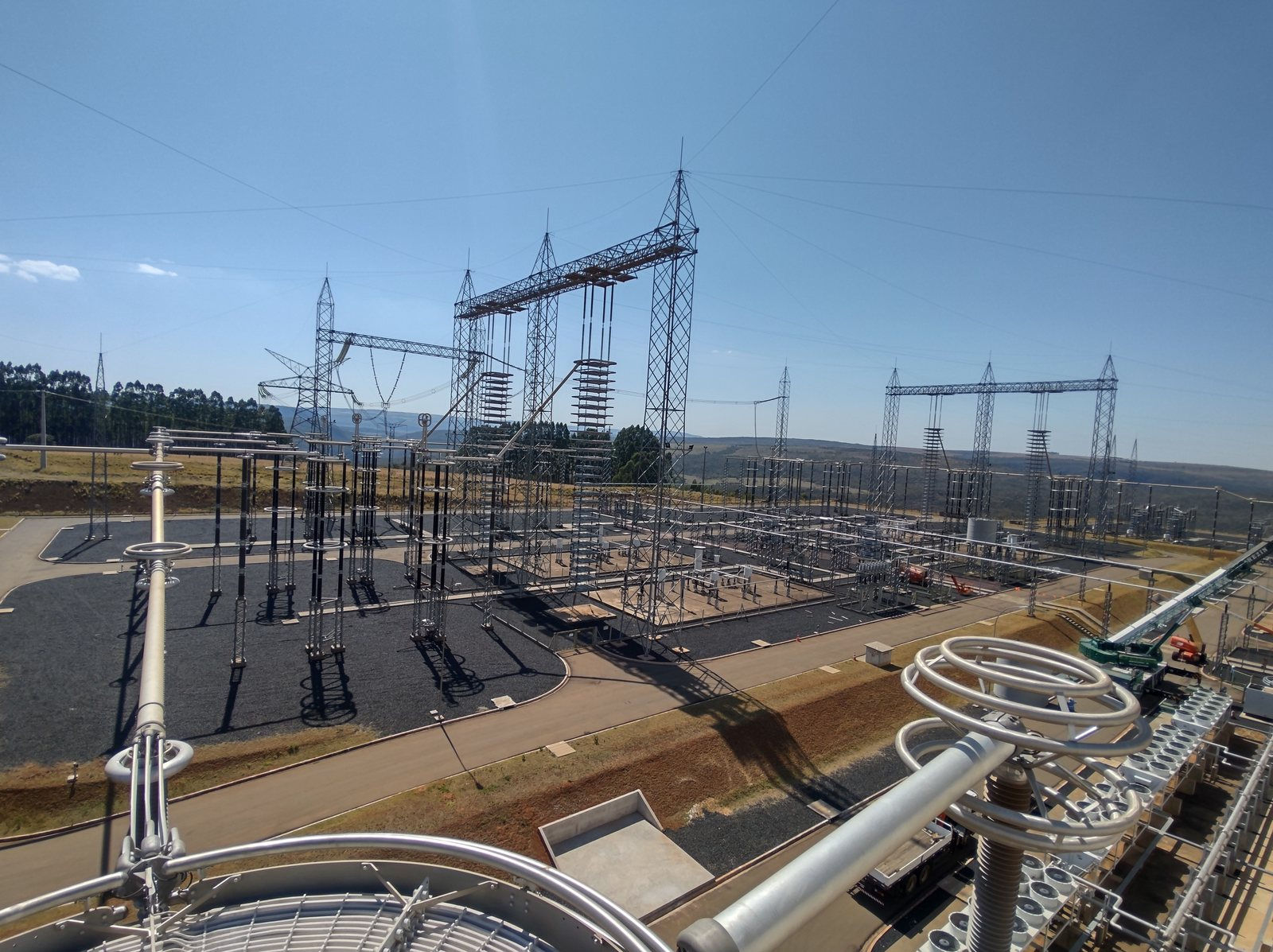

HVDC Test Systems
DC to ±2,000 kV for cable, capacitors and machine insulation
High-capacitance objects are hard on an AC source. A cable drum, a capacitor bank, a large stator winding — the charging current alone can size the supply. A DC test source removes that constraint and opens a set of tests an AC source cannot run at all: leakage current, pollution performance, discharge across long air gaps, and the qualification of equipment destined for an HVDC scheme.
Output covers ±200 kV to ±2,000 kV with load current from 5 mA to 2,000 mA. The ripple factor is low and the voltage drop under load stays small, which matters because a DC withstand test is judged on the voltage the object actually sees. Polarity is switched manually or automatically, and automatic grounding is fitted and manually selectable, so the stored charge on a capacitive object is dealt with before anyone approaches it. System weight runs from 420 kg to 21,550 kg depending on rating.
Why it matters
±200 kV to ±2,000 kV in one family covers cable and capacitor work at the low end and HVDC equipment qualification at the top.
Low ripple with low voltage drop means the object sees the test voltage you set, not the voltage the load allowed.
Automatic polarity switching removes the reconnection step between positive and negative polarity sequences.
Automatic grounding, manually selectable, handles the stored charge that makes a DC test on a capacitive object dangerous.
The source combines with IEC 60270 partial discharge measurement, so DC partial discharge work runs on the same circuit.
Ratings
Voltage: ±200 kV to ±2,000 kV
Load current: 5 mA to 2,000 mA
Ripple: Low ripple factor with low voltage drop
Polarity: Manual or automatic polarity switching
Safety: Automatic grounding, manually selectable
Weight: 420 kg to 21,550 kg depending on rating
Standards
IEEE Std 4
IEC 60060-1
IEC 60270 for combined PD measurement
Applications
Insulation testing of high-capacitance objects — cable, capacitors, motors and generators
DC discharge performance on long air gaps
Insulation material performance under HVDC
Leakage current testing
Pollution testing
HVDC transmission equipment qualification
Questions engineers ask
Can partial discharge be measured under DC? Yes. The system is specified for combined partial discharge measurement to IEC 60270. A low-PD coupling capacitor and a suitable detector are added to the DC circuit. Because DC partial discharge is evaluated by pulse counting rather than by a phase-resolved pattern, the detector and its settings are best specified together with the source.
Why use DC rather than AC on a large capacitive object? An AC source has to supply the full charging current of a high-capacitance object, which sizes the supply on reactive power instead of on the test itself. A DC source charges the object once. That is why DC is used for leakage current testing, pollution testing and long air gap discharge work, and for HVDC equipment qualification.
