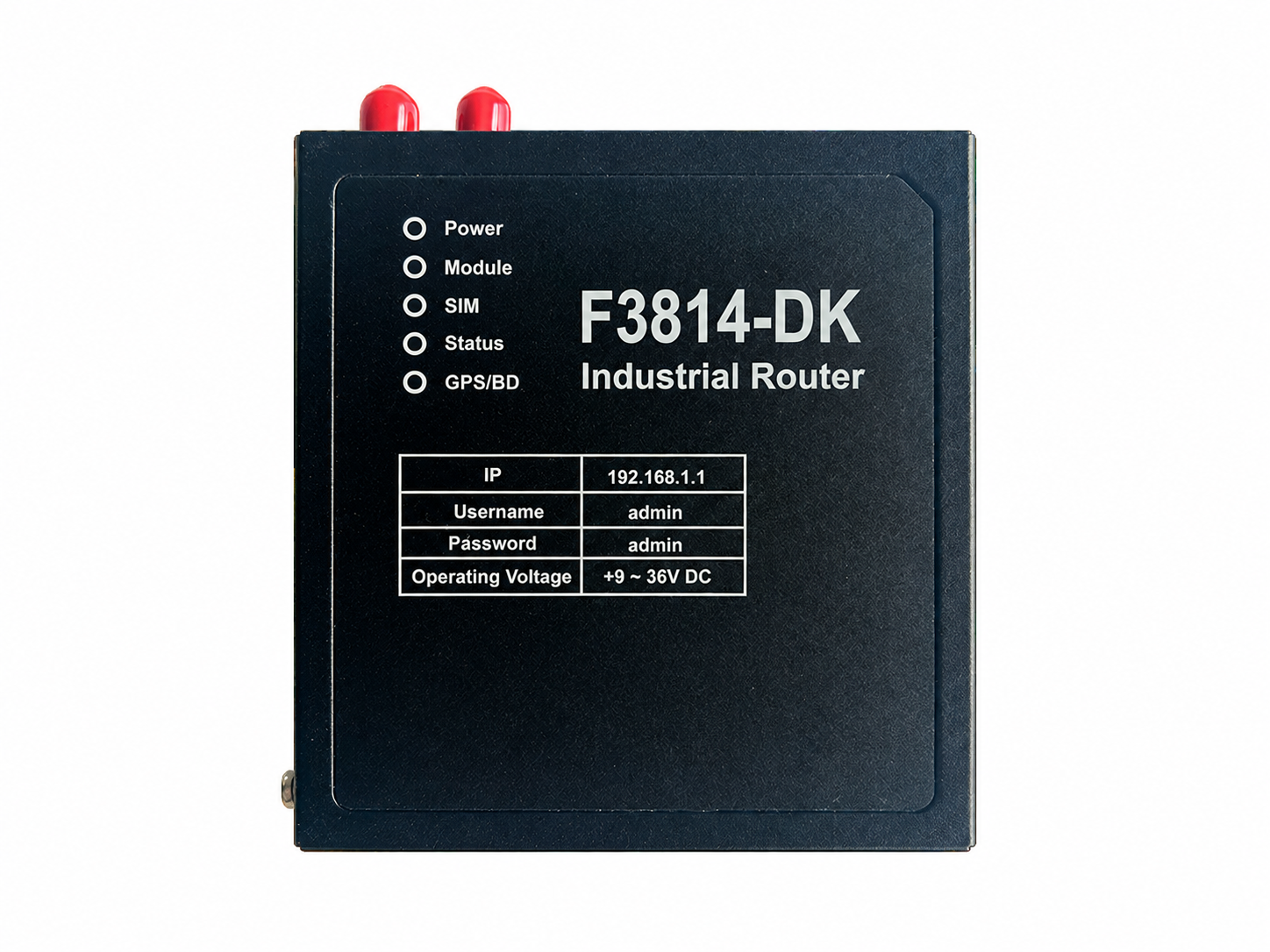
Industrial 4G/5G Routers & Edge Gateways
The communications layer under every automation project you deploy.
Every distribution automation project eventually stops being about the IED and starts being about the link. A fault indicator, an FTU or a meter is only as useful as the path that carries its data, and that path usually crosses a legacy serial port, a cellular network and a SCADA protocol that does not match what the field device speaks. This range covers that whole layer so the communications design is one purchase order instead of five.
Router families run from 5G dual-band and 5G with Wi-Fi 6 through 5G outdoor, 5G dual-SIM / dual-module and 5G industrial CPE, down to 4G/LTE routers with serial and Ethernet, dual SIM, Wi-Fi and a 4-port switch. Serial-to-cellular IP modems and data terminal units handle the older RS-485 devices that are not going anywhere. Edge computing gateways — including a smart light-pole gateway — process data at the site rather than backhauling everything. Intelligent protocol converters map between IEC 60870-5-101, IEC 60870-5-104, Modbus and DNP3.0 across RS-485, RS-232, Wi-Fi and Ethernet. Managed PoE industrial switches, industrial IP cameras with NVR and HV line security cameras round out the site.
Why it matters
Protocol conversion between IEC 60870-5-101, IEC 60870-5-104, Modbus and DNP3.0 lets you modernize the master station without replacing field IEDs, and add field IEDs without touching the master station.
Dual-SIM and dual-module 5G options give a second carrier path at sites where a single-carrier outage would take the automation scheme with it.
Edge computing at the gateway cuts what you pay to backhaul and keeps local logic running when the link drops.
Industrial temperature and EMC grades are what separates a substation router from an office router. In a switchyard, that difference shows up in the first year.
Buying the routers, converters, switches and cameras from the same source as the IEDs removes the integration argument about whose device is at fault.
Ratings
Router families: 5G dual-band, 5G + Wi-Fi 6, 5G outdoor, 5G dual-SIM / dual-module, 5G industrial CPE; 4G/LTE routers with serial and Ethernet, dual SIM, Wi-Fi and 4-port switch
IP modems / DTUs: Serial-to-cellular data terminal units
Edge gateways: 5G intelligent edge computing gateway; smart light-pole gateway
Protocol gateways: Intelligent protocol converters supporting IEC 60870-5-101, IEC 60870-5-104, Modbus and DNP3.0 over RS-485, RS-232, Wi-Fi and Ethernet
Ancillary: Managed PoE industrial switch; industrial IP cameras and NVR; HV line security cameras
Standards
DNP3.0
Modbus
IEC 60870-5-101/-104
Industrial temperature and EMC grades
Applications
Substation and pole-top communications backhaul
Protocol translation between legacy IEDs and modern SCADA
Remote asset connectivity in oil, gas and mining
Smart city and street-lighting infrastructure
Questions engineers ask
Can a protocol gateway convert Modbus devices into DNP3.0 for SCADA? Yes. The intelligent protocol converters map between IEC 60870-5-101, IEC 60870-5-104, Modbus and DNP3.0, and do it across RS-485, RS-232, Wi-Fi and Ethernet. That is the usual way to bring older Modbus meters and controllers into a DNP3.0 or IEC 60870-5-104 master station without replacing them.
Why use an industrial 5G router instead of a commercial one in a substation? Two reasons: environment and protocol. Industrial temperature and EMC grades keep the unit alive in a switchyard where a commercial router will not last. And the industrial units carry the serial ports and the SCADA protocol support that field devices actually need, which commercial hardware does not provide at all.
